Azure Autopilot with Intune – Part Two — April 11, 2019

Azure Autopilot with Intune – Part Two

Salaam, Namaste, Ola and Hello!

For those new to the blog welcome, and to those returning a big thanks! In part one of this series on ‘Azure Autopilot with Intune’ (https://iamitgeek.com/?p=123) I discussed what the Autopilot Service is, prerequisite requirements for this service and finally how to set it up.

In part two of the series I will now go through some of the user experience when logging onto a device that is added to the Autopilot Service as well as some features around the Intune profile you can setup to help manage the Windows 10 devices. As I have mentioned in previous blogs, I will be doing a separate series around ‘Intune Application deployment’ as its too big a topic to include here even though it has a big part to play with the Autopilot service.

Before any user’s login we really need to ensure that the device will be secure for them to use. Security of the device is controlled through the ‘Device Compliance’ section on the Intune portal and in here is where you can create policies for the different device types (Windows, Android, MAC and so on).

Device Compliance

If you click on Policies > Create Policy, you can create your platform specific compliance settings your devices must meet to be allowed access to your corporate network. In this instance we need a Windows 10 compliance policy, however those who are familiar with the blog post I did on ‘Samsung Knox Enroll with Intune integration’ will see the settings you can configure for Windows 10 devices are very similar.

Policy Settings

We have the Setting section which has:

  • Device Health
  • Device Properties
  • Configuration Manager Compliance
  • System Security
  • Windows Defender APT

Device Health: Here you can configure if Bit locker encryption and Secure boot are required or not. Device Properties: You can specify the minimum and maximum OS level on your Windows devices. This isn’t really as significant as it is for mobile phone devices, however you may have an application that can only run on a specific build of Windows 10, so with this part of the policy you can ensure your devices meet that requirement. System Security: Here we configure the password requirement settings, including Password length, maximum minutes of inactivity, number of previous password and password type to name a few. Windows Defender APT settings are specific to Windows 10 and it lets you specify what minimum risk level the device needs to be at to be compliant. The final and in my opinion the most important setting is ‘Actions of non-compliance’ which defines what actions need to be taken for devices that do not meet the compliance policy requirements. The two actions around this are ‘Send email to end user’ or ‘Remotely lock the non compliant device’.

End User experience : After the compliance policy is set you are now in a position for the end users to login. The great thing about Autopilot service is that it allows the end user to have that out of box experience (OOBE) where they can remove the laptop from the original packaging and box as if they have just been out and purchased the laptop themselves, rather than have it handed over from IT with little marks on it from where IT have been using it to install the OS and configure the apps. The end user will need to choose the language, time/date, accept the license agreement and connect it to the Internet (via Wi-Fi). Once this is connected to the Internet the device makes that connection with the Autopilot service which already knows about this device as we imported it right at the start. It then loads a company specific login page that you can configure within Azure which includes your company name, logo and IT support contact details. The user then logs in with their corporate email address and Autopilot starts to install the compliance policy as well as any apps you have provisioned. The beauty of this is that there is no or very little management needed from IT, and rather than spend time on deploying devices, they can spend time working on the compliance and applications side.

That concludes my blog series on Autopilot with Intune folks, I hope you enjoyed this series and I would love to know what you thought so please feel free to leave a comment in the comments section. Until next time, ‘IamITGeek’ over and out!

Azure Autopilot with Intune – Part One — April 8, 2019

Azure Autopilot with Intune – Part One

Salaam, Namaste, Ola and Hello!

For those who are new to my blog welcome! To those who are returning, a big thanks!! I recently did a two part series on Samsung Knox enrollment with Intune Integration which went through the steps needed to enroll Samsung mobile devices to the Azure Intune portal and then how to manage the devices via Intune.

This weeks ‘IamItGeek’ blog series is going to be on a similar topic: Using Azure Autopilot to enroll Windows devices into an Azure AD domain and then how you can manage the Windows device with Intune.

What is Autopilot? I have found one incorrect assumption made around Autopilot is that its a cloud based imaging service, however it is in fact a collection of technologies used to setup and pre-configure new Windows 10 devices. Now these could be devices purchased direct from vendors like Lenovo and Dell or even devices obtained via high street shops like PC World and Curries.

Requirements: Before you can use this service however there are a number of pre-requisites that need to be met:

  • Windows 10 version 1703 or higher

Windows 10 Pro, Pro Education, Pro for Workstation, Enterprise and Education are all Autopilot supported platforms

  • Relevant Subscription

To allow enrollment into the Azure Intune MDM service you need to ensure the users corporate Azure account has the correct subscription. Relevant Subscriptions include: Microsoft 365 (Business Subscription), Microsoft F1, Academic A1, A3 and A5, Microsoft Enterprise E3 and E5, Intune for Education, Azure AD P1 and P2, and any Microsoft Intune subscription.

One final requirement is needed before you can provision which is a set of device details that includes:

  • Device Serial Number
  • Windows Product ID
  • Hardware Hash

This information can be obtained in a few different ways and this all depends on how you purchase the devices. If you have purchased via the vendor, they can and should provide this which would make the process a lot easier. If however you are not able to do this you will need to login to the device and use Powershell to extract this information. I used the the following commands within Powershell to output a file with the information and then reset the device to OOBE (Out Of Box Experience):

Set-ExecutionPolicy -ExecutionPolicy Bypass

Install-Script -Name Get-WindowsAutoPilotInfo

Get-WindowsAutoPilotInfo -OutputFile C:\AutoPilot.csv

Once you have the csv file output you then need to import/upload this into the Azure Intune Portal

Windows 10 Enrollment

As you can see from the image above, you need to upload the csv by going to Windows enrollment > Devices and then importing the file into Intune

Import Autopilot Hardware csv

Once the import is started it can take some time depending on how many devices, however once this is completed you can start to build your security profiles and applications that will be deployed via Autopilot when the users first login to Windows.

That is it for part one, keep an eye out for part 2 where I will go into more details around creating and Autopilot profile and the end user experience when logging into the device for the first time. Until next time, ‘IamITGeek’ over and out!

Samsung Knox Enroll with Azure Intune MDM – Part 2 — April 3, 2019

Samsung Knox Enroll with Azure Intune MDM – Part 2

Salaam, Namaste, Ola and Hello!

For those who are new to my blog Welcome, and to those that are returning a big thanks!! In my last blog ( https://iamitgeek.com/?p=95 ) I went through Samsung Knox Enroll and what is required to integrate this with Azure Intune MDM. In part two of that series I will take a closer look at what you can do within Intune to deploy security policies and applications to the devices once they are enrolled.

At this point we have successfully enrolled our device into Intune via the Samsung Knox Enroll service so we should be able to see our mobile device in the Azure Intune portal. You can confirm this by going to going to Devices > All Devices within the Intune portal.

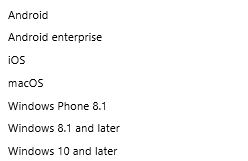
As with all devices that are going to store company data on, security is key. Intune uses Device Compliance policies to deploy security to its enrolled devices and supports the following platforms:

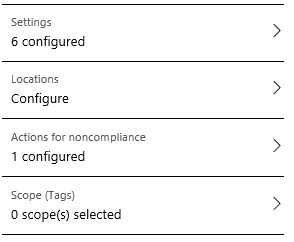
The purpose of the compliance policy is to ensure devices meet a certain criteria before they are authorized to access and store company data. At the same time if any existing devices become non-compliant you are also alerted about this. You create the policies within Device Compliance > Policies > Create Policy. In this case my requirement is to create a policy for Android devices. The initial configuration required is straight forward: Policy name, description and choose your platform. We then get four additional options –

Android Compliance Policy options

First option is ‘Settings’ which again gives us three sub options of: ‘Device Health’, ‘Device Properties’ and ‘System Security’. Device Health allows you to configure Device Threat level, block ‘rooted devices’ and add protection around Google play. The Device Properties option allows you to specify a minimum and maximum OS version which is a great feature if you have applications you wish to deploy that need a specific OS version. The third option, System Security is what I would say would be most commonly used settings that would be configured as its all based around passwords, encryption and device security. Finally you need to set an action for noncompliance, which basically tells Intune what do to if the device ever becomes non-compliant. The three available actions are:

  • Mark Device as non-compliant
  • Remotely Lock Device
  • Send Email to end user

Once the Compliance Policy is ready you then need to create a security group and assign this group to the policy.

Security Group

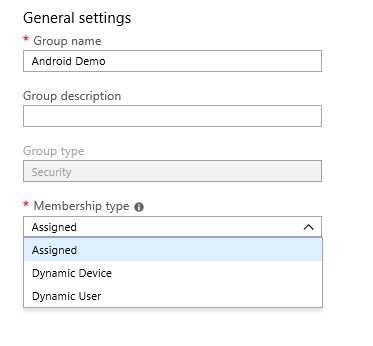
The feature to understand when creating a security group in Intune is the Membership type, and as you can see from the image above there are three:

  • Assigned
  • Dynamic User
  • Dynamic Device

In an Assigned group you can manually assign members whereas in a Dynamic User and Device group it is created with a specific query (User based and Device based respectively). In my case I created an assigned group and added my test account and Samsung device which was already enrolled into Intune. Once you have setup the compliance policy you then need to wait for your device to synchronize with Intune and download the policy to see if its compliant or not, and depending on what you configured in the ‘Actions for noncompliance’ section Intune will either lock the device, send an email or just simply mark the device as non-compliant in the portal.

When you are happy with the security and compliance of the device you can then start to look at deploying applications. There is a whole host of application types as you shown in the image below:

Application Types

During my testing I was able to successfully deploy an Android Application and a ‘Managed by Google Play’ application. I will not cover deploying applications in this blog as it deserves its own series (coming soon!!), however much like the compliance policies you can also deploy specific apps to specific groups of users and devices.

That concludes my blog series on Samsung Knox Enroll with Intune integration folks, I hope you enjoyed this series and I would love to know what you thought so please feel free to leave a comment in the comments section. Until next time, ‘IamITGeek’ over and out!

Samsung Knox Enroll with Azure Intune MDM – Part 1 — April 1, 2019

Samsung Knox Enroll with Azure Intune MDM – Part 1

Salaam, Namaste, Ola and Hello!

On this weeks ‘IamITGeek’ blog series I will be taking a in-depth look at Samsung Knox Enroll and how it integrates with Azure Intune to enroll & manage Samsung devices, as well as some of the cool ways in which you can utilize Azure Intune to deploy applications and security profiles to your mobile devices.

Samsung Knox Enroll: Samsung have a number of different services within the Knox suite including Knox Configure which allows you to configure profiles for devices and Knox Manage which is there full MDM solution. As with most third party MDM solutions they have a cost associated with them, however for existing Microsoft Intune customers you can utilize Knox Enroll which is a free service that allows you to automate the enrollment of Samsung (Android devices) into the Azure Intune MDM platform.

Before I used Knox Enroll, my previous experience with enrolling devices into Intune was manual and included having to download the Corporate Intune app from play store. In this blog i will take you through the integration of Samsung Knox Enroll with Intune which removes this obstacle, as well as how to deploy applications and security profiles to the devices from Intune once they are enrolled (In part two of this series).

Before you can configure the integration between Knox Enroll and Intune you need to first signup to Samsung Knox which is a relatively straight forward process. The only slight frustrating part of this is that you have to apply for the Enroll service which can take 2-3 days to go through. Once you are past that you are into the dashboard.

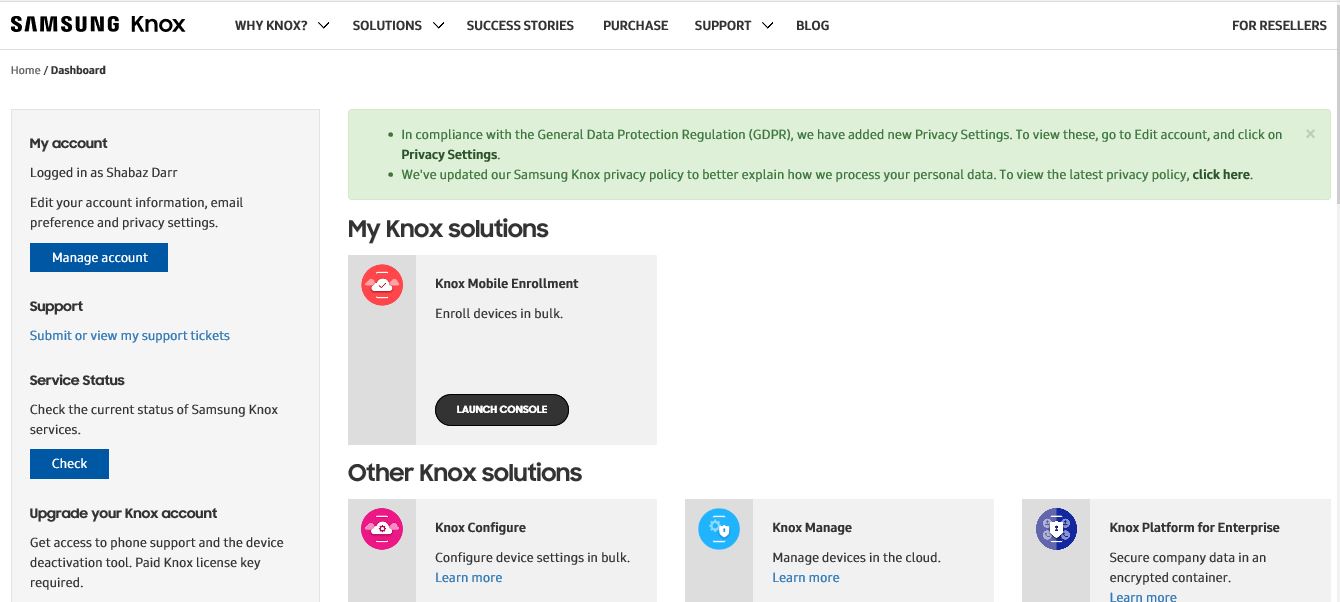
Samsung Knox Dashboard

As you can see from the image above once in the Dashboard you can start to access a number of services, some of which I mentioned earlier. Once in the Knox Mobile Enrollment Console you need to create an MDM profile. In this section we are basically configuring the integration with Intune which will allow for the auto enrollment into the MDM.

At this point I found the documentation available around configuring Knox Enroll profile with Intune was very poor and it took a lot of searching around various articles to find the correct information. After some trial and error the following fields were required to get the integration to work:

  • Profile name
  • Support Contact Details
  • MDM agent APK

The Profile name and support contact are very self explanatory, but the key is the MDM agent APK. This basically points Samsung Knox Enroll to the apk file for Azure Intune in the app store, which means the end user does not have to manually download it. At this point the slight confusion for me was not having to use the MDM uri, and looking for this originally did waste a lot of time. As I mentioned there does not seem to be much in technical documentation around how to set this up, where as there is a lot of information around an overview of the product and integration.

You will now need to add your device into the Samsung Knox portal. There are two methods around this:

  • Get a reseller to bulk add devices
  • Add a single device via Bluetooth

There is a section within the Admin console you can add a reseller which will then allow them to bulk add devices to your Samsung Knox portal. This method is more relevant if you are doing a mass roll out, however for the purpose of this blog I used the Bluetooth method which was straight forward and done via KDA (Knox Deployment App). This is a free download via the play store, however you need to make sure the following are in place before you can use this feature:

  • Must have a Samsung Knox Enroll login
  • Devices must support NFC or Bluetooth
  • Must have at least one profile configured in Samsung Knox Enroll

Once the device is added to the portal you can assign it the relevant profile which will then allow the enrollment into Intune process start. From a user perspective/experience, when they power on there device they will see a splash page which will show the support details we configured in the MDM profile earlier as well as a login prompt where they will need to use there Corporate Email details (Office 365/Azure) which will then add the device into the Intune MDM where the device will start to download any apps and security profiles configured within Azure.

That is it for part one folks, keep an eye out for part two where I will discuss some of the features around app deployment and security profiles within Intune that can be deployed to Samsung phones and how to do this. Until next time, ‘IamITGeek’ over and out!
Azure IaaS – Part 2 — March 25, 2019

Azure IaaS – Part 2

Salaam, Namaste, Ola and Hello!

For those who are new to the blog welcome, and for those returning a big thanks! In my last blog ( https://iamitgeek.com/2019/03/20/azure-iaas ) I set the scene for a project I had recently where I was working with a customer who was unhappy with there on premises Infrastructure and had a set of requirements which I believed made them ideal for an Azure IaaS based platform.

I ended the first part of this two blog series at the point of implementing the proof of concept.  You may notice a pattern with most of the work I do in that where possible I look to do POC’s, and the main reason for it is to give the customer a feel and understanding of what the final platform will look like.  It gives them the confidence that what I am proposing works and is also a great way to iron out any issues before going live!  As I mentioned in the previous blog the POC consisted of an Azure VNET, an IPSEC site-to-site VPN from Azure to the customers on premises Infrastructure, two Azure VMs (Domain Controller/File Server and RDS server) along with a small Office 365 tenancy.  We decided to implement the POC for staff only as we wanted to avoid causing any further disruption to the students.

Staff were able to utilise their existing thin clients and connect to the Azure based RDS instance via the site-to-site VPN on which we provisioned a set of pre-defined applications.  With the addition of email being hosted in Office 365, the platform was fully cloud based.  The feedback was 100% positive in that users were not having any of the same issues and pains that they felt with the current on premises Infrastructure.

Don’t get me wrong, it wasn’t smooth sailing all the way!  We had to ensure the POC was as realistic as possible, so getting the customers application base working within Remote Desktop Services was a challenge and required us to work with 3rd party vendors of the apps to get them fully functional.

Once the POC was completed and signed off it was time to spec the live platform and get the solution priced up.  One of the better pricing tools is the ‘Azure Calculator’ which made putting the specs and pricing together quick and easy!  Due to the nature of this requirement that the resources required were pretty static, we decided to go with the Reserved Instance pricing model which reduced the monthly cost by 70% making the solution even more appealing to the customer.  “But with the Reserved Instance model you have to pay upfront for the instance so isn’t monthly billing” I hear you say?  Reserved Instances are available with monthly billing on a CSP platform which is something we were able to offer this customer!

Due to the state of the on premises Infrastructure rather than migrate the domain we provisioned a new domain and migrated the only the data.  This meant new AD accounts, new NTFS permissions and whole new beginning for this customer!  We used a 3rd party tool to migrate the email (a topic I will be blogging about very soon!) from the Exchange 2007 and Office 365 which was again seamless!

Since the platform went live last year the customer has given great positive feedback and has even agreed for us to do a case study on there story!

Thanks for reading, I hope you enjoyed this two part blog of my experience with Azure IaaS  implementation/migration! Until next time, ‘I am IT geek’ over and out!

Azure IaaS – Part 1 — March 20, 2019

Azure IaaS – Part 1

Salaam, Namaste, Ola and Hello!

For those new to the blog welcome and to those who are returning a big thanks! This next series of blogs will be around Azure Infrastructure as a Service (IaaS) and specifically a project I was technical lead on around a migration from on premises Infrastructure to Azure IaaS.

Setting the Scene  – unfortunately this all came around due to an unhappy customer.  We have all been there and as I am sure any IT professional will agree an unhappy customer is not a great situation to be in.  This particular customer was a small educational institute with only about 30-40 users but close to 60 students.  The current Infrastructure consisted of two physical hosts, one with Hyper-V which hosted a few virtual machines including Domain controller, Exchange 2007, RDS and another physical file server.  Both staff and students used thin clients to connect to Remote Desktop services. Everything about the current solution was not right, with ageing hardware and a licensing model which was causing them more headache.

Now with a lot of these situations you would think this is easy…just upgrade the existing Infrastructure on premises and the jobs done! However there were many more factors to take into account, such as the customer had no local IT support to deal with issues when hardware onsite needed looking at or users needed help.  Other factors, and one of the biggest ones included budget, and wanting an Opex pricing model rather than a Capex model.

Around about the time the customer was having all these issues, I was spending a lot of lab time on Azure IaaS, in particular the compute and storage aspects when I had the light bulb moment…Azure IaaS is prefect!

I mean think about it…it takes away the headache of having hardware onsite, so with no local IT in place management becomes easy!  Azure IaaS is also monthly billing which meant no upfront investment and was ideal for the pricing model they wanted.

I took it upon myself to create a demo that consisted of an Azure VNET, an IPSEC site-to-site VPN from Azure to the customers on premises Infrastructure, two Azure VMs (Domain Controller/file server and RDS server) along with a small Office 365 tenancy and presented this to the customer.  The reaction and feedback was overwhelmingly positive, and we decided to put it in place as a POC for 10 users.

Azure IaaS – POC Overview

To find out how that went, along with how the Implementation and Migration went you will need to keep your eyes peeled for Part two of this series, so until next time, ‘I am IT geek’ over and out!

Azure Active Directory Migration – Part 2 — March 17, 2019

Azure Active Directory Migration – Part 2

Salaam, Namaste, Ola and Hello!

Welcome citizen to the ‘I am IT Geek’ blog!  This is part 2 of my experience with Azure Active Directory Migration a few years ago.

In part one I set the scene and explained how we ended up with Azure AD as the solution to meet this customers requirements, but all this was still theory.  Due to this technology being relativity new at the time, the customer wanted a Proof of Concept (POC) setting up and then to test with live users.  The main purpose of this was to enable us to document the migration process but at the same time iron out any potential issues before the mass migration to over 300 users.

Before POC could take place I needed to ensure the back-end Azure and Intune was setup correctly.  With this particular customer, as they already used Office 365, SharePoint online and Sky for Business, the Azure Active Directory was already setup and working.  The Intune setup was simple enough: Enable Intune via Azure AD, Create a Security Group for the Intune policy and assign the relevant users to this group and finally configure the Intune Policy.

Currently the Intune policy options are what I would call ‘Basic’ as you only really have a handful of security like settings (password length, Password type, password lockout etc).  At the time of writing this Intune is very much in it’s infancy but knowing Microsoft it will be a service that will develop very quickly.

With the basics of the policy completed there was some final testing to complete around profile migration, which ended up being the trickiest part.  The main reason for this being a requirement was that when you add a Windows 10 device to the Azure Domain it creates a new blank profile, much like it would if you were to add the any on premises domain.  In the end we found a great tool called ‘ForensiT User Profile Wizard’ which basically migrated the old local profile into the new Azure AD profile.  The slight caveat to this was that it did not migrate Google password store as this is encrypted, but logging into Google with the users gmail account got round this issue.

The POC was a massive success with the group of test users being migrated seamlessly and once migrated saw no difference in there daily work which was a massive positive.  In a way that is always a massive aim with any type of migration…make the impact to users as little as possible!

Due to the size of the migration being so wide (offices all over the world), my scope was to roll out Azure AD to the UK based users and provide documentation to allow the Global Infrastructure team to slowly migrate the global users onto the platform.  The main migration was a massive success which was all down to the careful planning, testing and documentation done in the build up.

Since the migration I have worked with the customer to implement Single sign on for 3rd party apps via Azure including SalesForce as well as deploying applications via Intune which just shows how they are embracing the platform!

Thanks for reading, I hope you enjoyed this two part blog of my experience with and Azure AD implementation/migration! Until next time, ‘I am IT geek’ over and out!

Azure Active Directory Migration – Part 1 —

Azure Active Directory Migration – Part 1

Salaam, Namaste, Ola and Hello!

Welcome to ‘I am IT geeks’ first technical blog!!  As i explained in my introduction i will be blogging about my own experiences working in the IT industry.  The first experience i will be talking to you about today is a recent Azure Active Directory migration i managed for a customer who is based in the Financial sector.

Setting the Scene – This particular customer was already using Office 365, SharePoint online and Skype for Business in addition to a Cloud based VOIP system, so you could say they were already big fans of ‘The Cloud’.  The issue they had was that every user laptop was on its own work group! That’s right citizen…in 2017 there are people still in work groups….even multi million pound corporations!  With GDPR fast approaching the customer needed a solution that would allow them to secure and manage devices whilst ensuring they are compliant….Enter Azure AD!

The initial discussions we around putting in a VM within Azure and promoting this to a Domain Controller, however i soon came to the conclusion that this was not going to be the right solution.  This particular customer is a Global Financial Consultants so have lots of small offices around the globe.  To make the Domain Controller VM in Azure work it would have required a Site-to-Site VPN from Azure to each office location they wanted to utilize which would mean a lot of management overhead.

AzureVM

As you can see it looks simple enough from a high level overview as above, but the issues i found were more specific.  For example the Azure VPN has a list of supported Firewall/Router vendors and model’s, however that does not mean it wont work with ones that are not on the list.  Unfortunately for me this customer had different routers at each site, which again added to the management overhead.  Another stumbling block was the number of Site-to-Site VPNs that were supported.  In this case we were using the Basic S2S VPN which supports a maximum of 10, however the number of remote offices exceeded this.

I was quickly realizing that i needed a plan B which I found in the form of Azure AD!  Not only did it solve the problems the S2S VPN was providing, but with the addition of a Enterprise Mobility & Security license it opened up a whole new range of possibilities to the customer.  With the EM&S license, all the sudden Single Sign on to 3rd party apps like Slack, DropBox and Sales Force was possible.  Multi Factor Authentication was no longer a pipe dream. And the cherry on top of this Azure cake was Azure Intune and its MDM feature, allowing the customer device management, auditing and reporting that was previously not available.

AzureAD

With GDPR just around the corner Azure Intune was a key factor in the customer deciding to deploy Azure AD and EMS across the business….however citizen you will need to wait for part 2 of this blog to see how the migration went so until next time, ‘I am It Geek’ over and out!


Welcome to the ‘IamITgeek’ blog!! —

Welcome to the ‘IamITgeek’ blog!!

Salaam, Namaste, Ola and Hello!!

Welcome one and all to what is my first ever blog!!  You may have heard the saying ‘I am Batman’…well ‘I am IT geek’!  Loving husband and father by night, IT geek by day!!

The main focus of my blogs will be around my experiences working in the IT industry as well as topics within the industry that i am passionate about including Security, Networking and this ‘thing’ people keep talking about called Cloud!

I am not saying i am an expert in any of these fields…but i sure as heck am passionate about them which is the next best thing!  These blogs will be like a roller coaster journey with highs and lows so hold on tight!!!

Until next time folks…IT geek over and out!!